After a challenging and interesting career in Chicago government, social services, and education, Richard Reeder is now involved in teaching adult education classes in literature, organizing and moderating literary events, and writing. Sarasota is Richard’s fourth published book, and his first novel. Read More
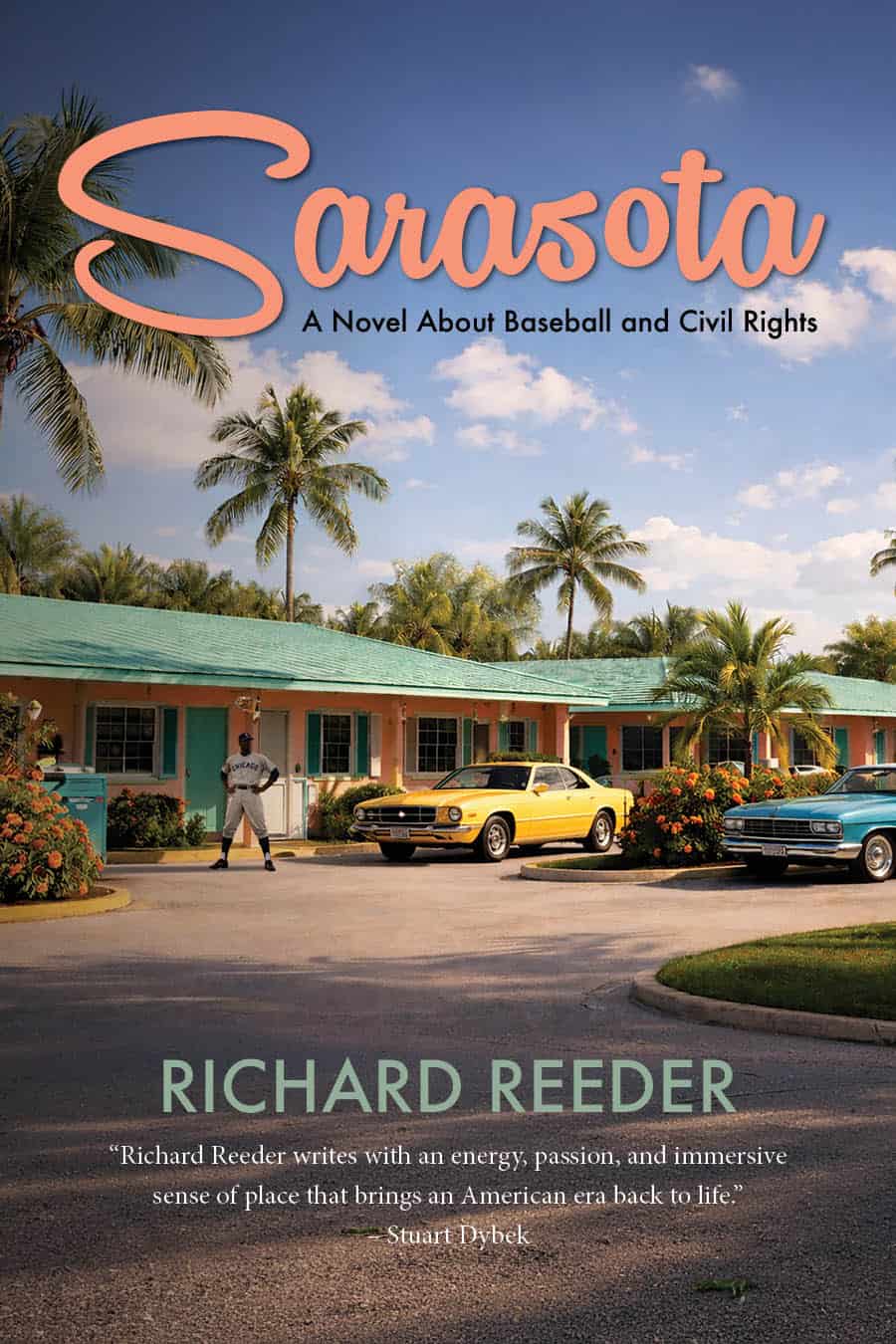
Sarasota
July 1, 2026
Trade Paperback
Available now!
$25.00
Sarasota is a work of historical fictional leading up to the purchase of a hotel in Sarasota, told from the perspective of a crusading white journalist, shortly after the Kennedy presidential campaign in Florida.
-

Richard Reeder
Author
-
Richard Reeder in his historical novel, Sarasota, writes with an energy, passion, and immersive sense of place that brings an American era back to life. This is not a novel about nostalgia. There’s a freshness to the account and an “I was there” sense of moral clarity that makes it real. Discrimination against Black professional baseball players in the American South did not end when Jackie Robinson broke the Major League Baseball color barrier in 1947. Reeder relates the story of some of those who stepped up to the plate and put an end to those lingering Jim Crow practices.
Summary
Although Jackie Robinson broke the Major League Baseball color barrier in 1947, Black players were still dealing with racial segregation during spring training in the South in the early 1960s. It was then that the Chicago White Sox became a significant player in the civil rights movement. In a bold and courageous move, the team ownership bought a hotel in Sarasota, Florida, and integrated it immediately. Soon the other teams followed suit and integrated their housing accommodations as well. It was a major victory over the prevailing Jim Crow culture.
Sarasota, the novel, is a work of historical fictional leading up to the purchase of the hotel, told from the perspective of William Pennington, a crusading white journalist, who we first meet working on the Kennedy presidential campaign in Florida. After the campaign, Pennington lands a position in the White Sox public relations office where he comes to grips with painful truths about racism, both societal and personal, during that turbulent time in American history.